
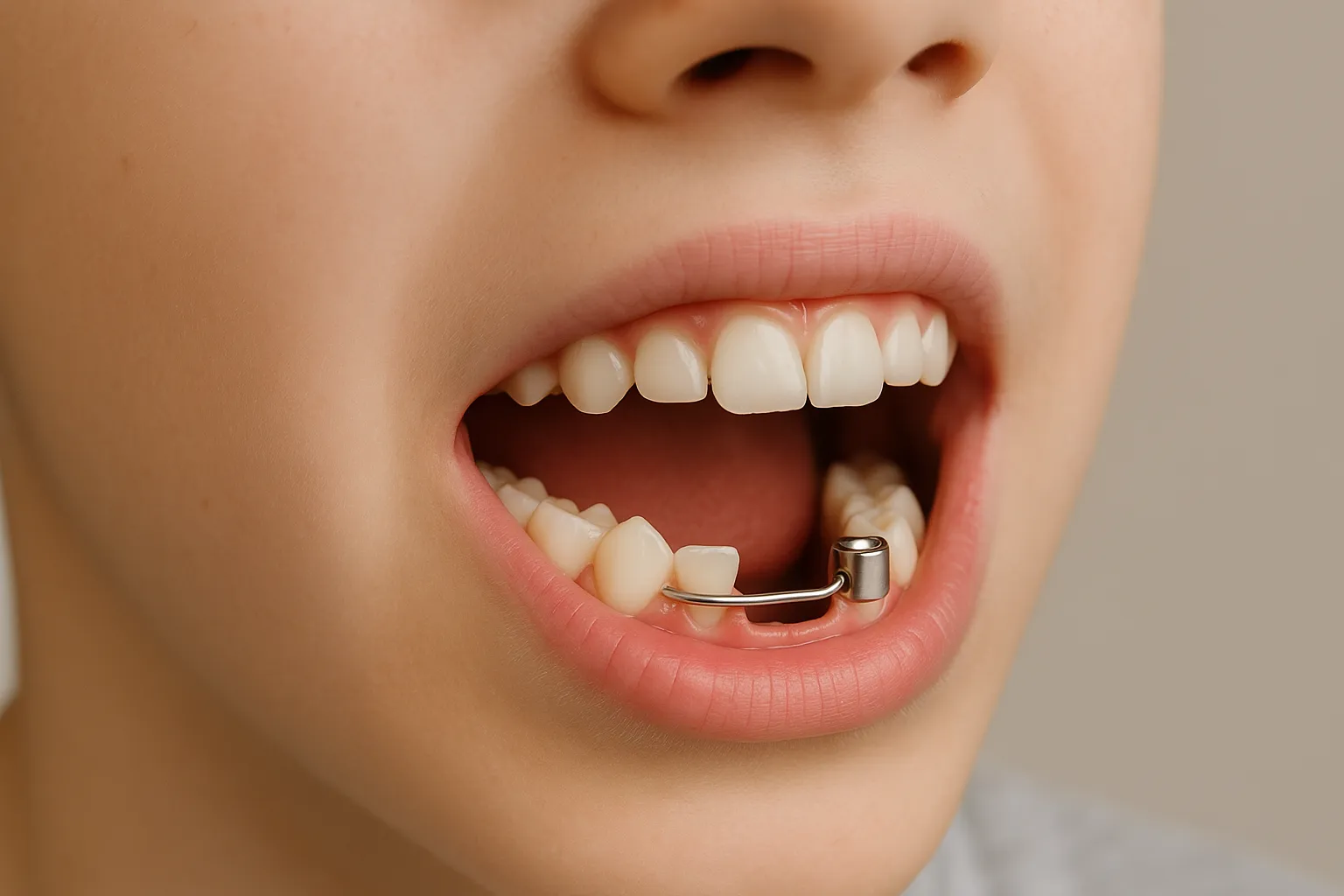
Holding the spot open so grown-up teeth come in where they belong.
A space maintainer is a small dental appliance that holds the gap open when a child loses a baby tooth too early, so the adult tooth underneath still has room to come in straight. Without one, the neighboring teeth drift into the empty space within months — and the permanent tooth erupts crooked, blocked, or crowded. It's one of the simplest, cheapest pieces of preventive dentistry there is: a small appliance now instead of years of braces later. Here's everything Austin parents ask us about space maintainers, from types and cost to what to do when one breaks.
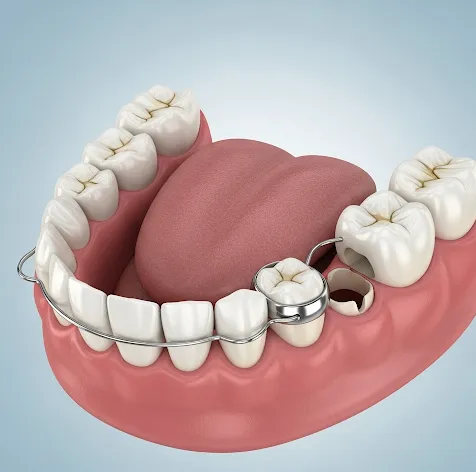
Baby teeth are placeholders. Each one saves a parking spot for the permanent tooth developing underneath, and normally it doesn't fall out until that adult tooth is ready to take its place. When a baby tooth is lost early — to decay, an accident, or an extraction — the spot goes unguarded, and teeth are opportunists: the neighbors tip and slide into the gap surprisingly fast.
A space maintainer is a custom-fitted metal or acrylic appliance that physically holds that spot open until the permanent tooth erupts. It doesn't move teeth like braces do — it just keeps everything where it already is. Your dentist takes an impression or scan, a lab makes the appliance to fit your child's mouth exactly, and it's fitted at a short second visit.
Not every early tooth loss needs one. Front baby teeth lost early often don't require a maintainer, while back molars almost always do. That's a judgment call we make with an x-ray, based on which tooth was lost and how far along the adult tooth underneath is.
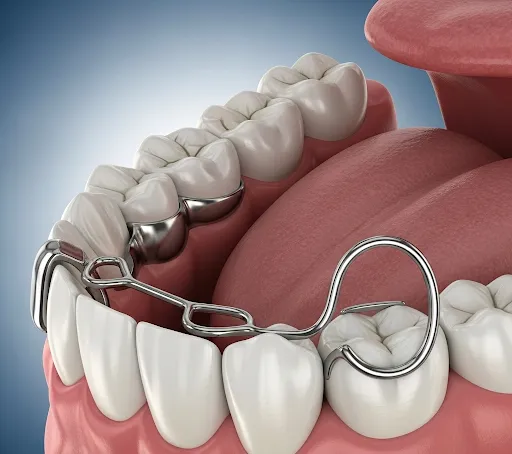
The right design depends on which tooth was lost, where it sits, and whether more than one tooth is missing:
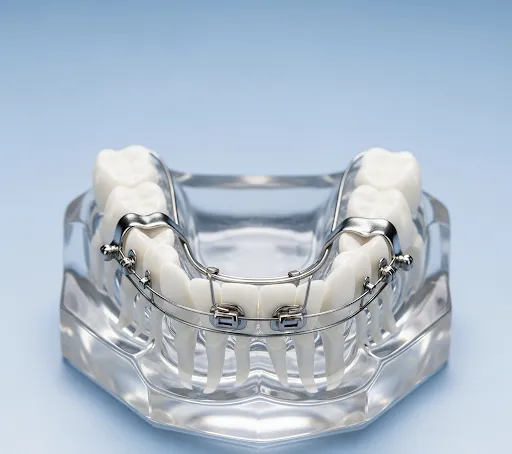
The short answer: when a baby tooth is lost well before its natural exit date and the adult tooth underneath is still more than a few months away. Common situations include:

A space maintainer costs a small fraction of the orthodontic treatment it prevents — a band-and-loop is one of the least expensive appliances in dentistry, while bilateral designs cost somewhat more. We quote your exact price in writing before we start, so there are no surprises.
Most dental insurance plans cover space maintainers as preventive or basic care for children, and Texas Medicaid and CHIP typically cover them when a tooth is lost early. No coverage? Our membership plan and payment options keep it manageable — just ask.
Compare that with the alternative: crowding, impacted teeth, and extractions that turn into comprehensive orthodontics. Holding the space is the cheap part.
Space maintainers are low-maintenance, but a few habits keep them working until they've done their job:
Getting a space maintainer takes two short, painless visits as part of our pediatric dentistry care. At the first, we take an impression or digital scan and place a spacer if needed; at the second, about a week later, the custom appliance is cemented on. No numbing required — most kids are more curious than nervous.
Your child wears it until the permanent tooth starts to break through the gum, which can be months or a couple of years depending on age. Removal takes minutes: the cement is released and the appliance lifts off, its job done.
Everything you need to know before your first visit. Have another question?
Call 512-430-4472 →A space maintainer is a small custom appliance that holds the gap open after a child loses a baby tooth too early, so the adult tooth can come in straight. Without it, neighboring teeth drift into the space within months and cause crowding.
Until the permanent tooth starts to erupt through the gum — anywhere from a few months to a couple of years depending on your child's age. We track progress with x-rays at regular checkups and remove it at the right moment.
No — fitting one doesn't even require numbing. It may feel odd for the first few days, but most kids stop noticing it within a week.
It is one of the least expensive appliances in dentistry — a small fraction of the braces it can prevent. Most insurance plans, Texas Medicaid, and CHIP typically cover it for early tooth loss, and we quote your exact price in writing first.
Call us promptly — teeth start drifting within weeks when the space is unguarded. Save any pieces, and we'll re-cement or remake the appliance at a quick visit.
We review your benefits up front and lay out every option in plain language — so cost is never the reason care gets delayed.
We work with most major providers, plus Medicaid and Medicare for adults and children.
View all insurance options →In-house payment plans and third-party financing so treatment fits your budget, not the other way around.
View all financing options →





Tell us a little about what you need — we'll be in touch shortly.
2110 W Slaughter Ln Ste 190, Austin, TX 78748, United States

Hi! I'm Tooth fairy! Your AI Assistant Ask me anything