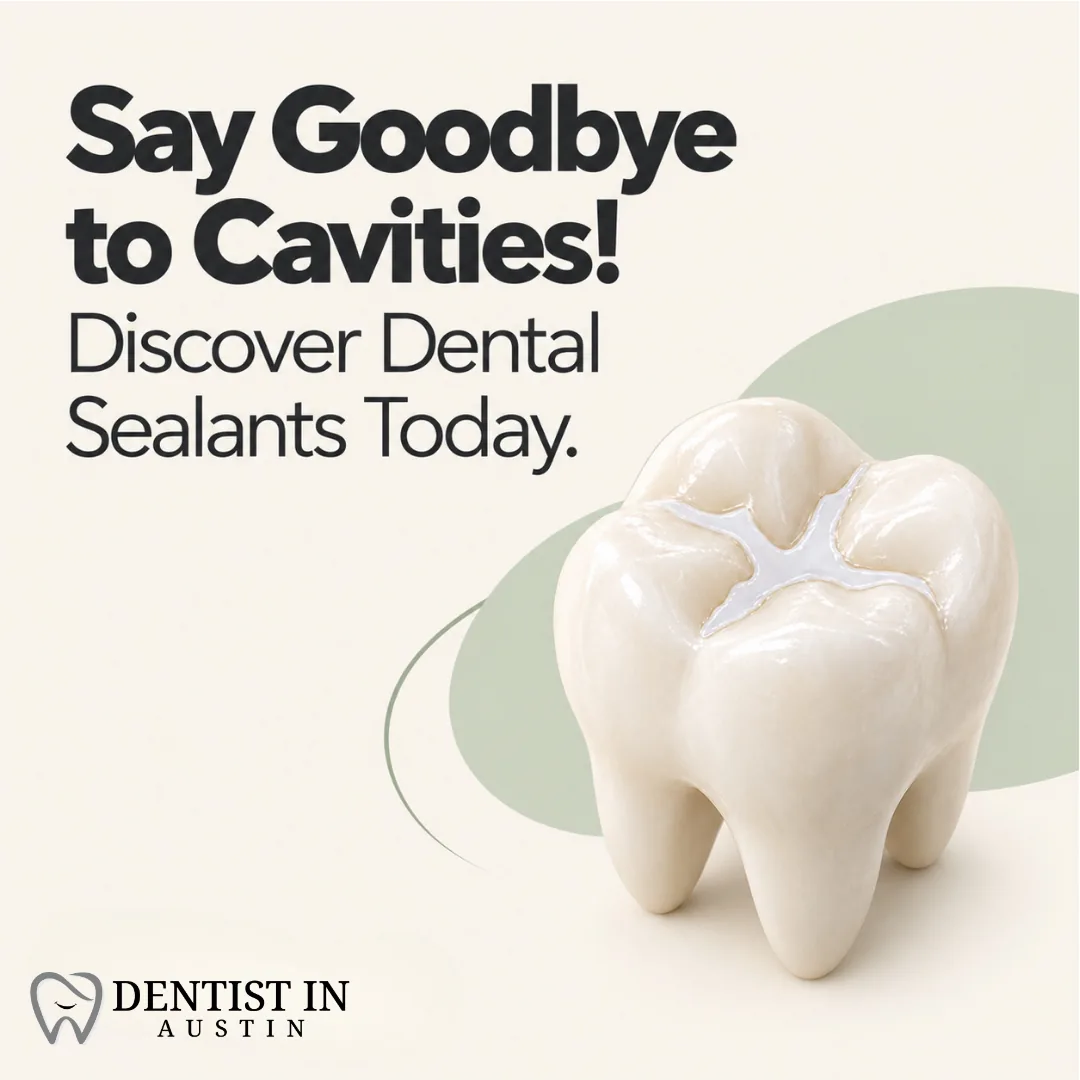
Many parents and teens worry about cavities on the chewing surfaces of back teeth. Food and plaque hide in deep pits and fissures. Brushing often misses those spots. That leaves teeth open to decay.
Dental Sealants act like a thin raincoat for molars. They can cut cavity risk by about 80 percent in the first two years on treated teeth. Here you will know what sealants are, how they block bacteria, and who should get them.
Dental sealants act as a thin protective coating that shields chewing surfaces on molars and premolars. Dentists place the sealant over pits and fissures to block plaque and bacteria that cause caries and tooth decay.
The plastic coating bonds to enamel in a quick sealant application. Kids in pediatric dentistry get them most often, but adults with deep grooves can benefit too; this simple step helps cavity prevention without drilling or pain.
Dental sealants act like raincoats for your teeth. They keep bacteria out of tricky spots where brushing can miss, stopping tooth decay before it starts.
Dental sealants provide a strong shield against harmful bacteria. These protective coatings cover the chewing surfaces of teeth, especially molars. By filling in the pits and fissures, they prevent plaque from settling into hard-to-reach areas. Bacteria often love to hide in those grooves, leading to tooth decay and cavities.
Once applied, sealants act like a barrier against caries and other threats. This simple solution enhances dental hygiene for kids and adults alike. Regular brushing helps too, but sometimes it is not enough on its own. Sealants offer that extra layer of defense when it matters most for oral health.
Tooth enamel has natural grooves and pits, especially on molars. These areas collect food particles and plaque easily. Bacteria love to hide there, causing cavities over time. Dental sealants fill these spaces with a protective coating. This barrier keeps harmful substances out. Filling those deep grooves is like putting a lid on a jar; it keeps bad stuff from getting inside!
Dental sealants offer excellent protection against cavities. They create a smooth barrier that keeps bacteria and plaque away from tooth surfaces, especially in those tricky grooves.
Dental sealants act like a shield for teeth, blocking out harmful bacteria and plaque. They fill the small grooves and pits on tooth surfaces where food often gets trapped. This protective coating helps keep cavities at bay.
Studies show that children with sealants have fewer cavities than those without them. The application of dental sealants is quick and painless, making it an easy choice for parents wanting to boost their kids' oral health. In fact, this preventive measure can significantly lower the risk of tooth decay over time.
Applying dental sealants is a fast and easy process. Patients often enjoy the quick visit to the dentist. The procedure usually takes only a few minutes per tooth. First, the dentist cleans the teeth thoroughly. Next, they dry each tooth before putting on the sealant. This protective coating fills in any pits and grooves.
Most people feel no pain during this application process. Dentists use a special light to harden the sealant quickly. Afterward, patients can return to their normal activities without delay. Sealants offer an effective way for kids and adults to block cavities and support oral health easily.
Kids and teens benefit significantly from dental sealants. Their back teeth often have deep grooves that trap food and plaque, making them prime targets for cavities. Adults with healthy molars can also take advantage of this protective layer. Sealants help keep smiles bright by shielding those important chewing surfaces from decay.
Children and teens benefit greatly from dental sealants. These young ones have grooves and pits in their molars that easily trap food particles and bacteria. Sealants provide a protective coating over these chewing surfaces, helping to prevent cavities and tooth decay.
Regular dental visits can help assess if they need sealant application. Since kids often do not brush thoroughly, sealants act as an extra layer of defense against plaque buildup. For teens who may snack frequently or indulge in sugary drinks, this preventive measure is crucial for maintaining oral health.
Adults with healthy back teeth can greatly benefit from dental sealants. These handy protective coatings fill in the pits and fissures on molars, stopping plaque from building up. With enamel protection in place, adults lower their risk of cavities and decay. The application process is quick and painless.
Regular dental hygiene care remains important even after getting sealants. Adults should still brush and floss daily to keep their mouths healthy. Sealants work best as a preventive measure alongside good habits at home and regular visits to the dentist.
Dental sealants are thin coatings applied to the chewing surfaces of teeth. They act like a shield, protecting against cavities and decay.
Sealants fill in the grooves and pits on teeth. This prevents food particles and bacteria from settling in these hard-to-reach areas, making it harder for cavities to form.
Children and teenagers often benefit most from sealants since their molars are more prone to decay. However, adults can also use them if they have deep grooves or risk factors for cavities.
Generally, dental sealants are safe with minimal risks involved. Some people may feel slight discomfort during application; however, this usually fades quickly after the procedure is done.
Tell us a little about what you need — we'll be in touch shortly.
2110 W Slaughter Ln Ste 190, Austin, TX 78748, United States
Hi! I'm Tooth fairy! Your AI Assistant Ask me anything