A child wakes with a sore tooth. Parents worry and think about shots, root canals, or losing a baby tooth. Many jump to panic. They want clear answers and a calm plan.
One fact helps: a pulpotomy removes only the sick part of the pulp and keeps the healthy tissue. This saves the primary tooth until it is ready to fall out. Here you will know what happens before, during, and after the procedure.
What Is a Pulpotomy?
A pulpotomy is a dental procedure that treats the inside of a child's baby tooth when tooth decay gets too close to the nerve. Dentists remove only the damaged part, helping keep the rest of the tooth healthy and strong.
Understanding the Pulpotomy Procedure for Baby Teeth
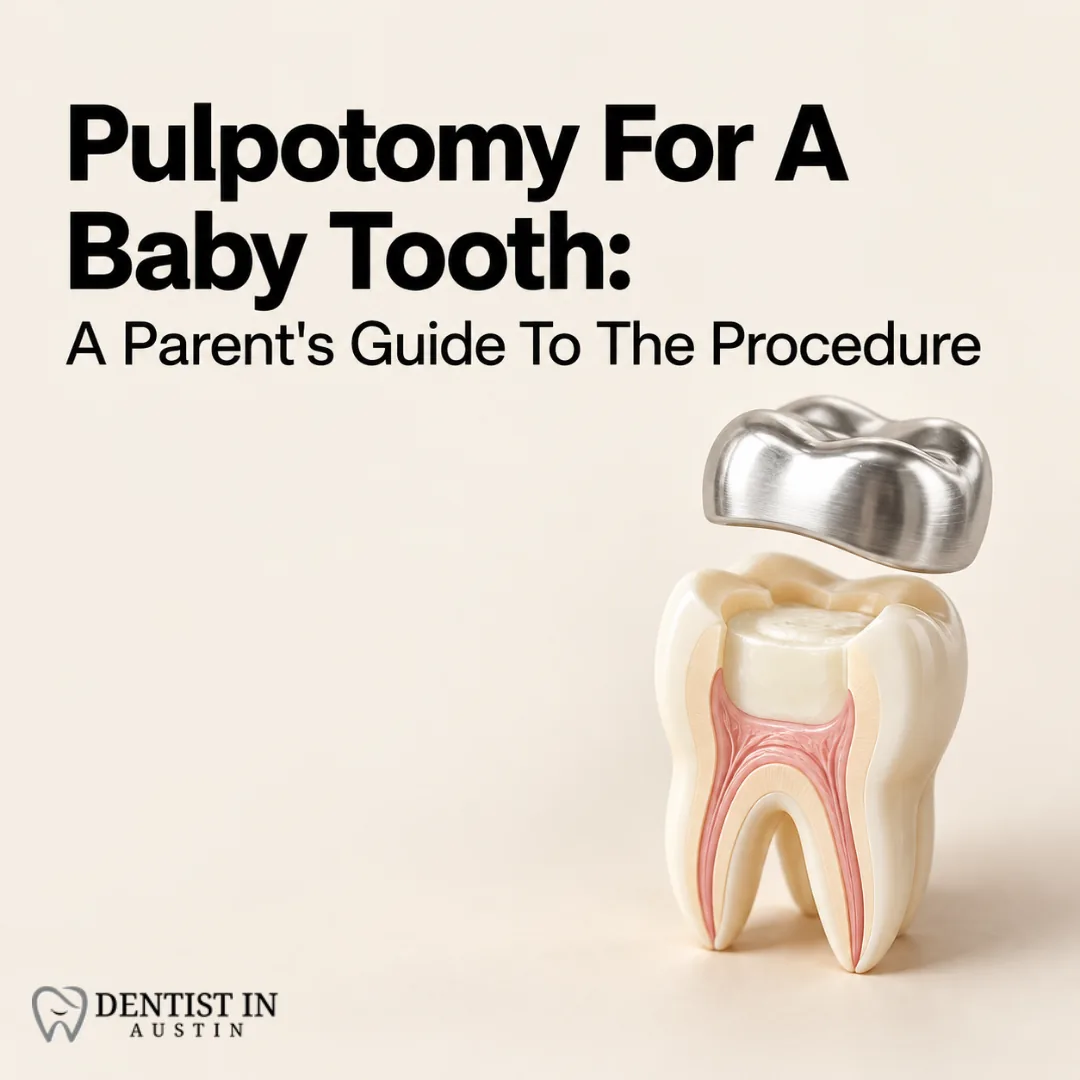
Dentists remove the soft, infected pulp from the crown of a primary tooth and leave the healthy root pulp intact. This pulp therapy stops pain and fights tooth infection without a full root canal.
The dentist numbs the area and uses small tools to clear decay. A father shared that his child sat still after a short game on an iPad, and the visit lasted less than an hour.
The dentist places medication to protect the remaining pulp and then seals the tooth with a filling or crown. Pediatric dentistry teams often recommend this dental procedure over extraction to keep the bite and space for permanent teeth. Parents see faster recovery and fewer visits when the child follows aftercare instructions.
Steps in a Pulpotomy Procedure
Steps in a pulpotomy procedure unfold like a simple recipe. First, the dentist prepares the child by explaining what will happen. They then numb the area around the affected tooth to keep pain at bay.
Next, they access the pulp chamber and remove infected tissue while saving healthy parts. After that, they fill up the space with special material to protect it further. Following this, parents should follow care instructions closely for smooth healing.
Preparing Your Child for a Pulpotomy
A pulpotomy can be a necessary procedure for a baby tooth. Parents should prepare their child for this dental treatment with care and understanding.
- Explain the Procedure: Share details about the pulpotomy in simple terms. Describe how the dentist removes infected pulp from the tooth to help keep it healthy and functional.
- Use Positive Language: Talk about the procedure positively, focusing on benefits like keeping their smile bright and preventing pain. Reassure your child that this helps avoid tooth extraction.
- Practice Comfort Techniques: Teach your child relaxation methods such as deep breathing or counting to ten. These techniques can help ease anxiety when visiting the dentist.
- Role Play: Act out a visit to the dentist at home. Take turns playing doctor and patient to make the experience feel familiar and safe.
- Discuss What to Expect: Prepare your child for what will happen during the appointment, including sitting in a special chair and receiving gentle numbing medicine.
- Bring a Comfort Item: Allow your child to bring along a favorite toy or blanket. A known object can provide comfort during a dental procedure.
- Schedule Wisely: Choose an appointment time that works best for your child’s mood and energy levels, like after nap time or when they are usually calm.
- Stay Calm Themselves: Parents' emotions can influence children’s feelings about dental visits, so staying relaxed can promote confidence.
- Offer Rewards Afterward: Plan something fun afterward as motivation—a trip to the park or extra storytime at bedtime—for completing the visit without fear.
- Follow Up with Care Instructions: After the procedure, discuss any aftercare instructions with your child clearly, ensuring they know how to care for their tooth post-treatment to promote better dental health.
Performing the Pulpotomy on a Baby Tooth
Children often face dental issues, especially with their baby teeth. A pulpotomy can help save a tooth that has decay or infection.
- The dentist first numbs the area around the affected tooth. This step keeps the child comfortable during the procedure.
- Next, they create an opening in the top of the baby tooth. This access allows them to reach the pulp inside.
- Once in, they remove any infected or damaged tissue from the pulp chamber. The goal is to keep healthy tissue intact.
- After clearing out the pulp, the dentist applies a medicated dressing. This dressing helps reduce inflammation and fights infection.
- They then seal the tooth with a temporary filling for protection. This step prepares it for further restoration later.
- If needed, follow-up appointments will occur for permanent restoration plans; these may include crowns or other solutions.
- Throughout this process, parents can stay close by for support and reassurance; distraction techniques might include toys or stories.
This approach helps maintain dental health and gives children a fighting chance against tooth decay and infections.
Aftercare for Baby Teeth Following a Pulpotomy
After the dentist finishes the pulpotomy procedure, parents should focus on aftercare. Proper care helps ensure your child’s dental health stays on track.
- Administer pain relief as directed. The dentist may recommend over-the-counter medication for discomfort. Follow dosage instructions carefully, especially for younger children.
- Monitor your child's eating habits. Soft foods work best in the days following the procedure. Avoid sticky or hard foods that can irritate the treated area.
- Encourage regular brushing but be gentle around the affected tooth. Cleaning can help maintain dental hygiene, but don’t apply too much pressure where sensitivity might occur.
- Schedule follow-up appointments as suggested by the dentist. Regular check-ups allow for monitoring of healing and ensure no further issues arise after treatment.
- Watch for signs of infection such as swelling or increased pain. If these symptoms appear, contact your dentist immediately to discuss next steps.
- Reinforce good oral hygiene habits at home to prevent future decay or infections in primary teeth. This includes brushing twice a day and limiting sugary snacks.
- Educate your child about their oral health and why they need to care for their teeth even if they are baby teeth. Understanding this can motivate them to participate actively in their dental care routine.
- Provide plenty of fluids, particularly water; staying hydrated supports overall recovery and keeps the mouth healthy.
- Celebrate successes! Rewarding positive behavior related to dental visits can reduce anxiety in future appointments and build healthy associations with dental care.
Advantages of Pulpotomy for Baby Teeth
A pulpotomy provides several benefits for children with tooth decay. This dental procedure saves the primary tooth while preserving healthy tissue. It allows parents to avoid a more complicated root canal or extraction later on.
A pulpotomy also helps maintain proper spacing for adult teeth, which is crucial for a child's developing smile.
Additionally, this treatment can relieve pain caused by tooth infections. Children often feel better after having the procedure done. Parents appreciate that a pulpotomy can improve their child's dental health and overall well-being, making it an effective option in pediatric dentistry.
Frequently Asked Questions
What is a pulpotomy for a baby tooth?
A pulpotomy is a dental procedure used to treat decay in a baby tooth. It involves removing the infected pulp tissue inside the tooth while keeping the healthy part intact.
Why would my child need this procedure?
If your child's tooth has severe decay or infection, a pulpotomy can save it from extraction. This helps maintain their smile and allows normal chewing until the permanent tooth comes in.
Is the procedure painful for my child?
Most children feel little discomfort during a pulpotomy thanks to local anesthesia. Dentists take great care to ensure your child feels safe and comfortable throughout the process.
How should I care for my child's tooth after treatment?
After a pulpotomy, follow your dentist's instructions closely. Soft foods are best for a few days, and regular brushing should continue but be gentle around that area to avoid irritation.