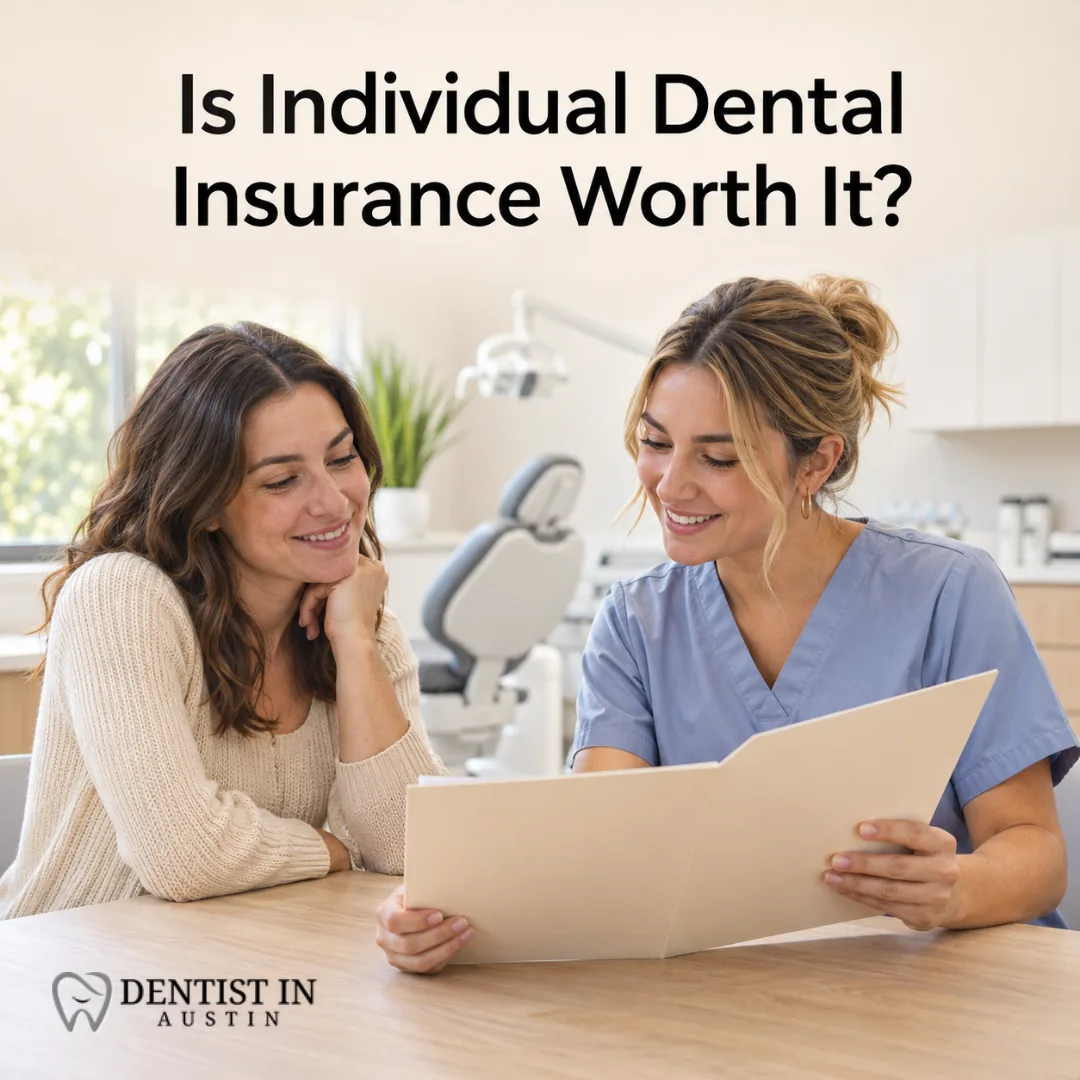
Many people wonder, is individual dental insurance worth it, when checkups, fillings, and sudden extractions can hit the wallet. They worry about premiums, coverage limits, and surprise out of pocket costs. The question feels personal, and it matters to oral health and family budgets.
One fact, most plans pay well for preventive care, like cleanings and exams, but they often limit major work, and have waiting periods. Here you will understand plan types, costs, and common trade offs.
Individual dental insurance lets a person buy a policy that helps pay for dental care. Policies cover checkups, cleanings, X-rays, fillings, extractions, and sometimes orthodontic work. Plans differ in premiums, deductibles, copays, coverage limits, and annual maximums.
The plan’s goal is to lower out-of-pocket expenses, promote preventive care, and protect oral health. People should compare coverage details and costs, to judge if premiums will save money on likely dental expenses.
There are different kinds of dental insurance plans. Each one has its own perks and rules, making it crucial to pick the right fit for your needs.
PPO plans let patients pick dentists in or out of network, they mix choice with some cost control. They cover preventive care like checkups and cleanings, often at 100 percent for in-network visits.
Premiums usually run higher than DHMO plans, so patients pay more each month. A dentist who treated many adults reported patients liked choosing specialists without referrals, and they found this helpful for complex dental treatments.
Copays, deductibles, and coinsurance can raise out-of-pocket expenses for extractions and crowns. Annual maximums often cap payouts at $1,000 to $2,000, which can limit coverage for major work.
The dentist shared a case where a patient paid half the crown cost after meeting the deductible, and still saved compared with paying fully out of pocket. Coverage varies by plan, so patients should weigh premiums against likely dental care costs.
DHMO plans keep premiums low, and they use a set network of dentists, so out-of-pocket costs stay predictable. Members pick a primary dentist, expect fixed copays for checkups and cleanings, and need referrals for specialists.
Coverage favors preventive care, so routine exams and X-rays cost little or nothing, but extractions or crowns may hit limits if treatment leaves the network.
A dentist who has worked with DHMO patients reports clear savings on routine care, and gives an example, a patient paid $22 per month and cut dental expenses by about $250 in one year.
That same clinician notes tradeoffs, like fewer provider choices and strict copay schedules, which can affect coverage for major treatments.
Indemnity plans offer flexibility for dental care. With these plans, individuals can choose any dentist they want. There is no network restriction. Patients pay their dentists upfront and then file a claim for reimbursement.
These plans often come with higher premiums but provide broader coverage options. They typically cover preventive care like checkups, basic services such as fillings, and some major treatments including extractions.
However, it is important to check the specific coverage limits; not all procedures may be included under these plans. Indemnity insurance can help manage out-of-pocket expenses while maintaining freedom in selecting dental providers.
Indemnity plans lead to another option: dental discount plans. These plans are simpler and often cheaper than traditional insurance. They work like membership programs. Members pay a fee to access discounts on dental services.
With a dental discount plan, you save money on checkups, cleanings, and more. You usually pay upfront for treatments but get reduced rates. This can lower out-of-pocket costs significantly.
Many people find these plans helpful for preventive care and basic treatments, making oral health more affordable and accessible.
Individual dental insurance usually covers a variety of services. Most plans focus on preventive care, like checkups and cleanings, which help keep smiles bright and healthy.
Preventive and diagnostic services are key parts of dental insurance. These services help keep smiles healthy.
These preventive care options play a big role in overall oral health. The next section will cover basic and major services offered by individual dental insurance plans.
Dental insurance plans cover basic and major services. These services help with common dental needs and can save money on significant treatments.
Assessing this information enables individuals to decide whether this financial investment fits their needs well or not.
Basic and Major Services set the stage for discussing Orthodontic Coverage. This type of coverage is crucial for those needing braces or other orthodontic treatments. Many individual dental insurance plans include some form of orthodontic care.
Coverage often applies to both children and adults, but terms can vary widely between plans. Some may cover a percentage of costs, while others could offer a fixed amount. Always check policy details to see what is included regarding braces, retainers, and other aligners.
Costs can add up quickly without insurance help. Understanding the specifics can make a significant difference in out-of-pocket expenses related to these dental treatments.
Costs for individual dental insurance can add up. Premiums, deductibles, and copays all contribute to overall expenses. People often overlook out-of-pocket costs linked to treatments too. Understanding these details helps make informed choices about insurance plans.
Premiums are the monthly payments for individual dental insurance. These fees can vary greatly based on the type of plan and coverage chosen. Some plans may have low premiums but offer limited benefits. Others might cost more each month, yet provide better coverage.
Choosing a plan means weighing costs against needs. A lower premium sounds great, but it could lead to higher out-of-pocket expenses later on. Individuals must consider their oral health habits too.
Regular checkups and cleanings can save money in the long run, which makes understanding premiums crucial for smart decisions about dental care costs.
Premiums relate to deductibles in dental insurance. A deductible is the amount a person pays out of pocket before insurance activates. For instance, if someone has a $100 deductible, they must pay that amount for dental care first.
After meeting the deductible, benefits begin to apply. This means coverage assists with costs like checkups or fillings. However, it’s essential to note that not all services contribute to the deductible.
Some preventive care may be covered without needing to meet it first. Grasping these costs can lead to better decisions about individual dental insurance and overall oral health expenses.
Copays and coinsurance are important parts of individual dental insurance. A copay is a fixed amount paid for each visit to the dentist. For example, one may pay $20 for a checkup or cleaning. Coinsurance, on the other hand, is a percentage of the total cost that one pays after reaching their deductible.
Many plans have both copays and coinsurance. This means patients pay different amounts based on their treatments. For basic services, there might be a 20% coinsurance after meeting the deductible.
For major procedures like extractions or crowns, the costs can rise significantly. Knowing these costs can help manage out-of-pocket expenses better while planning for dental needs and oral health care.
Annual maximums set a cap on how much an insurance plan will pay each year. This amount can vary widely among different plans. Many individual dental insurance policies have annual maximums between $1,000 and $2,000.
Once the policyholder reaches this limit, they must pay for any additional services out-of-pocket. This can lead to higher expenses if unexpected treatments arise, like extractions or root canals.
Individuals should review these limits closely when selecting a plan to avoid surprises later on!
This section lists quick pros and cons for people choosing dental coverage.
| Pros | Summary Points |
|---|---|
| Lower routine costs | - Preventive visits often paid in full, saving money on cleanings and X-rays. |
| Financial predictability | - Monthly premiums, known copays, predictable budgeting for dental care. |
| Access to networks | - Many plans give a set of dentists to choose from, making choice easier, and sometimes faster appointments. |
| Discount on major work | - Plans can reduce costs for fillings, crowns, and root canals, lowering out-of-pocket bills for big procedures. |
| Orthodontic options | - Some plans include braces for children or adults, at partial coverage levels, sometimes with waiting periods. |
| Cons | Summary Points |
| Limited coverage for major care | - Major procedures often reach low annual maximums, leaving patients to pay large balances. |
| Waiting periods | - New plans commonly have 6 to 12 month waits for major services, which delays needed treatment. |
| Network limits | - Out-of-network care can cost much more, and some preferred dentists may not participate. |
| Cost vs use | - If visits are rare, premiums may exceed what a person would pay for care without insurance. |
| Annual maximums | - Caps often fall between $1,000 and $1,500, so multiple major procedures may not be fully covered. |
| First-Hand Experience | Brief Account |
| Patient story | - One person saved $120 on cleanings over a year, but faced a $900 bill for a crown when the plan hit its yearly cap; they switched plans the next January. |
People who frequently visit the dentist should consider personal dental insurance. Regular checkups maintain dental health and can save money in the long run. Dental expenses can accumulate quickly, especially for services like extractions or major treatments.
Having coverage helps reduce out-of-pocket costs during these times. It provides a safety net that makes necessary care less stressful.
Individuals without employer-sponsored insurance might gain from personal plans as well. Freelancers, self-employed workers, or those between jobs benefit from having their own coverage.
It offers peace of mind knowing they will be financially protected against unexpected dental issues. With rising dental care costs, it’s prudent to consider an insurance plan crafted to individual needs and budget limits.
Individual dental insurance covers various dental services for one person. It helps pay for check-ups, cleanings, fillings, and sometimes more complex procedures.
It depends on your needs. If you visit the dentist regularly or need specific treatments, it can save you money in the long run. However, if you rarely go to the dentist, paying out of pocket might be cheaper.
Most plans cover preventive care like cleanings and exams fully; they may also help with basic work like fillings and crowns at a reduced rate. Major services usually have higher costs associated with them.
Look at what each plan offers before making a choice; consider factors such as coverage limits and waiting periods for major procedures. Reading reviews can also give insight into customer satisfaction with different providers.
Tell us a little about what you need — we'll be in touch shortly.
2110 W Slaughter Ln Ste 190, Austin, TX 78748, United States
Hi! I'm Tooth fairy! Your AI Assistant Ask me anything