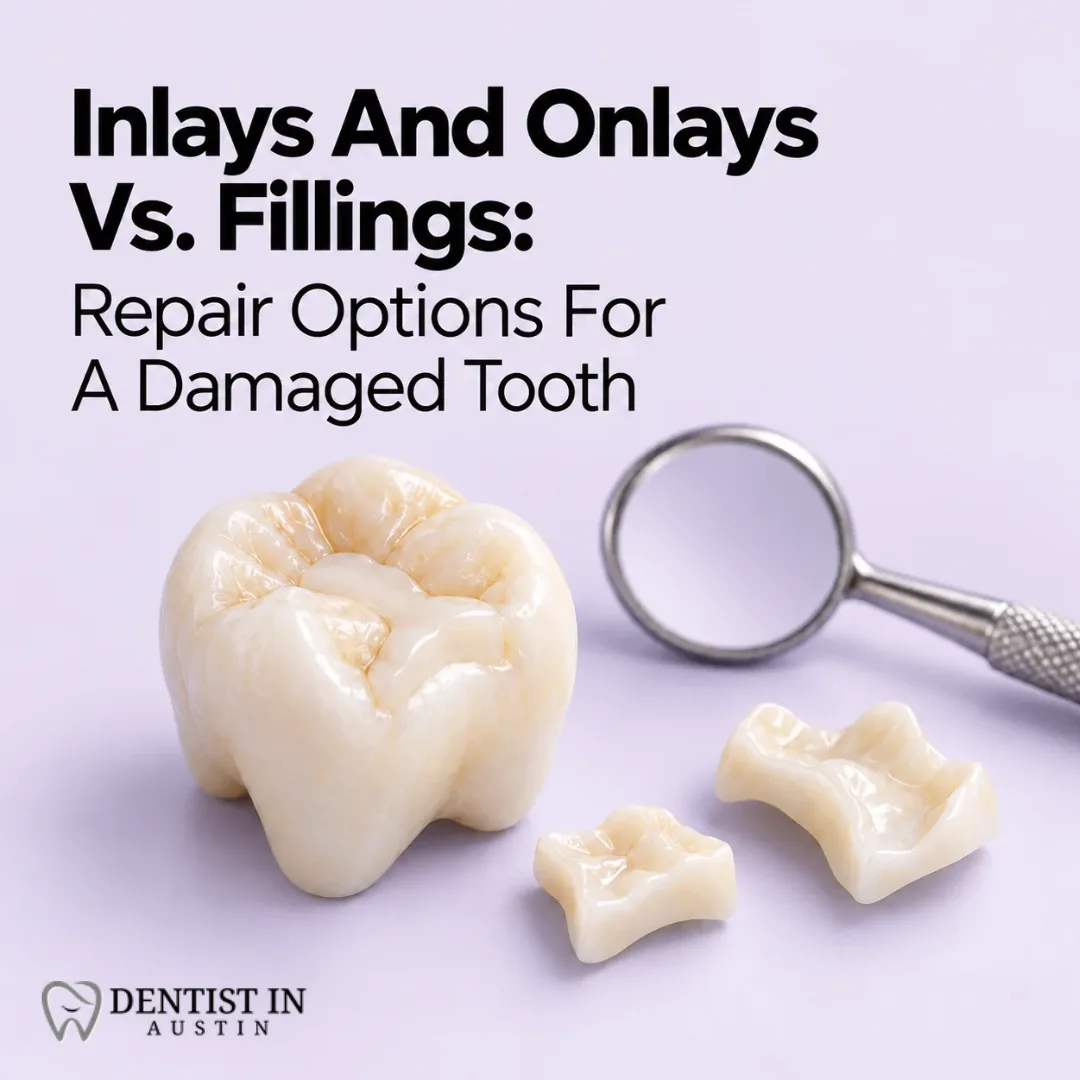
A tooth looks cracked or a cavity feels deep. Many people wonder if a simple filling will fix it. They worry about more drilling or losing the tooth. This is a common dental problem.
Inlays and onlays are lab-made restorations that often last longer than many fillings. Here you can compare fillings, inlays, and onlays. You can understand when each option works best, how they affect tooth strength, and what to expect from treatment.
Dental fillings play a big role in fixing cavities and minor tooth damage. They help dentists patch up teeth so people can chew, smile, and laugh without worry.
Fillings stop decaying quickly. Many patients want a fast, simple fix.
Dental fillings work well for minor cavities and small tooth damage. They act quickly, restoring the tooth’s function and shape. Many people benefit from composite fillings as they blend easily with natural teeth. This makes them a favorite for front teeth where appearance matters.
For those who grind their teeth at night, fillings can help prevent further wear. These repairs also suit young patients whose teeth are still developing. Dental professionals often recommend fillings if decay is caught early, allowing preservation of more tooth structure.
A prompt visit to the dentist can save time and money down the line while keeping oral health in check.
Inlays and onlays offer smart solutions for tooth repair. Both options fit snugly into the grooves of a damaged tooth, giving it strength and support.
A quick guide helps spot the main differences.
| Feature | Inlay | Onlay | Filling |
|---|---|---|---|
| Coverage |
|
|
|
| Materials |
|
|
|
| Durability |
|
|
|
| Tooth preservation |
|
|
|
| Procedure |
|
|
|
| Best use cases |
|
|
|
| First-hand clinic note |
|
Inlays and onlays serve as excellent options for tooth repair, especially when fillings fall short. These treatments work well for moderate to severe decay or damage. A dentist might suggest inlays if the damage affects the inner part of the tooth, while onlays fit better for more extensive issues that need extra coverage.
Choosing between these two methods depends on the size of the cavity and how much tooth structure remains intact. In many cases, inlays and onlays provide better strength than traditional dental fillings do.
They look natural too, making them a fantastic choice for those who want to maintain their smile's appearance while improving oral health.
When faced with a damaged tooth, choosing the right repair option makes all the difference. Fillings, inlays, and onlays each have unique benefits that affect durability and tooth strength.
Durability varies by material and technique.
| Repair Type | Typical Lifespan | Strength Gain | Key Factors | Maintenance Tips | Typical Cost Range (USD) |
|---|---|---|---|---|---|
| Composite Filling | 5 to 7 years on average | Moderate, bonds to tooth | Size of cavity, moisture control during placement, patient bite | Limit chewing hard foods, avoid grinding, keep good oral hygiene | $100 to $400 per surface |
| Amalgam Filling | 10 to 15 years commonly | Good under heavy load | Tooth size, corrosion over time, biting forces | Regular checkups, watch for cracks or staining | $100 to $300 per surface |
| Porcelain Inlay | 10 to 15 years typical | High, restores cusps well | Fit precision, cementation quality, opposing teeth | Floss gently at margins, avoid hard candies | $650 to $1,200 |
| Porcelain Onlay | 10 to 20 years possible | Very high, covers cusps | Crown coverage needed or not, occlusion, bite adjustments | Night guard if grinding, routine exams | $700 to $1,500 |
| Gold Inlay/Onlay | 20 years or more in many cases | Excellent, resists wear | Precise lab work, cement quality, opposing materials | Polish contacts if needed, monitor margins | $800 to $2,000+ |
| Full Crown (for comparison) | 10 to 25 years depending on material | Maximum tooth reinforcement | Amount of tooth removed, material choice, cement type | Protect from heavy impact, keep gum tissue healthy | $800 to $2,500+ |
Dentists note that material choice drives life expectancy. Patients who grind teeth shorten repair life. Larger repairs tend to fail sooner. Proper bonding and fit extend service years. Regular exams catch problems early.
Tooth Preservation and Strength with Fillings, Inlays, and Onlays
Fillings, inlays, and onlays all offer different levels of tooth preservation. Fillings usually treat smaller cavities. They are quick and easy but can wear down over time. Inlays fit into the cavity while onlays cover more surface area. Both provide added strength to the tooth.
Choosing inlays or onlays can protect a damaged tooth better than fillings alone. These options restore larger areas without removing too much healthy tooth structure. Patients gain durability from these restorations, making them a solid choice for long-term oral health.
Inlays and onlays are dental restorations used to repair damaged teeth. They fit into or over the tooth, providing strength and support. These options are often more durable than regular fillings.
Fillings fill cavities caused by decay but may not offer as much strength as inlays or onlays. Fillings can wear down faster, especially if the damage is significant.
If your tooth has extensive damage, an inlay or onlay is usually better. They cover larger areas and provide extra support for weakened teeth compared to standard fillings.
Yes, they can be more expensive than fillings and require multiple visits for placement. However, their durability often makes them worth the investment for long-term dental health.
Tell us a little about what you need — we'll be in touch shortly.
2110 W Slaughter Ln Ste 190, Austin, TX 78748, United States

Hi! I'm Tooth fairy! Your AI Assistant Ask me anything