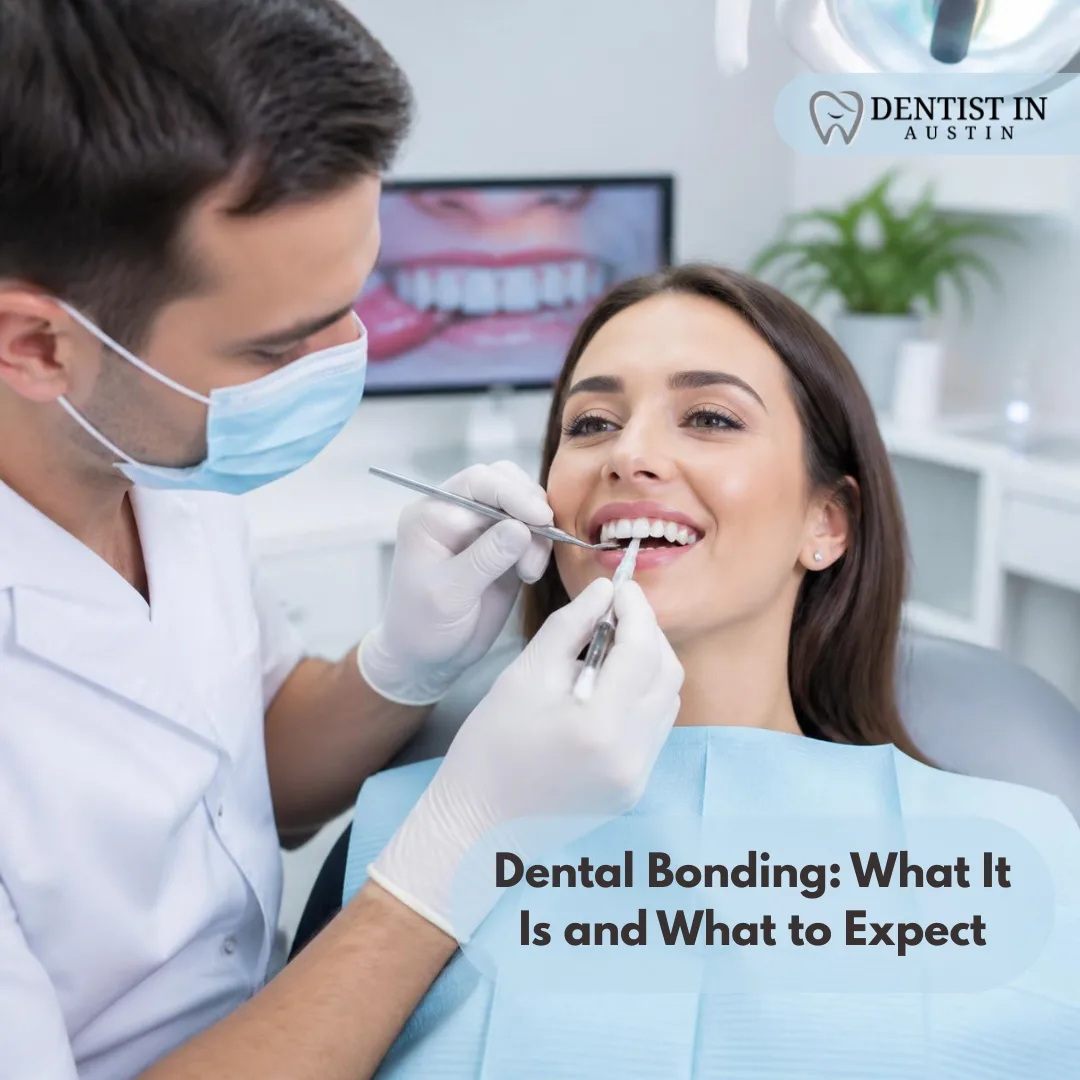
Many people feel self-conscious about chips, cracks, gaps, or stained teeth and want a quick, painless fix that still looks natural. That's exactly what dental bonding is for. It uses a tooth-colored composite resin to repair and reshape a tooth, and most cases are finished in a single visit.
The procedure bonds composite resin to your tooth with a dental adhesive. It's comfortable, usually takes 30 to 60 minutes per tooth, and often requires no anesthesia at all. Below is the step-by-step process, how to prepare, what aftercare looks like, and the honest benefits and limits of dental bonding in Austin.
Bonding is a straightforward treatment. Your dentist starts by preparing the tooth — cleaning the surface and lightly roughening it so the resin has something to grip. A liquid conditioner and bonding adhesive are then applied, creating a durable attachment between the composite and your natural enamel.
Next, the tooth-colored resin is applied and matched to the shade of your surrounding teeth. Your dentist shapes and sculpts it to the size and contour you want, then hardens it with a special curing light. A final trim and polish blends the repair into the tooth so it's difficult to spot.
Start to finish, expect about 30 to 60 minutes per tooth — an efficient option when you want a visible improvement without the lab time that porcelain veneers or crowns require.
Preparation is simple. Your dentist evaluates the tooth, talks through what you'd like changed, and may take X-rays to rule out decay or a crack that needs a different repair. Because bonding removes little to no enamel, local anesthesia usually isn't needed unless the resin is being used to fill a cavity.
Aftercare is what determines how long the result lasts. Avoid hard foods and habits like nail biting or chewing ice, especially on a bonded front tooth. Keep up daily brushing and flossing, and keep your routine exams and cleanings on schedule so your dentist can catch chipping or staining early and polish or repair it quickly.
Most patients find bonding one of the easiest appointments in dentistry. There's no drilling in a typical cosmetic case, no needle, and no downtime — you can eat, work, and go about your day immediately afterward. The bonded area may feel slightly different against your tongue for a day or two while you get used to the new contour.
If your bite feels high or the tooth feels rough, call us. A quick adjustment takes minutes and protects the bond from stress it wasn't shaped to handle.
Composite resin isn't as strong or as stain-resistant as porcelain. It can wear, chip, or crack faster than natural enamel, particularly on biting edges or if you grind your teeth. Coffee, tea, red wine, and tobacco can discolor bonded areas over time — and unlike natural enamel, bonded resin doesn't respond to teeth whitening, so heavy stains mean replacing the bonding rather than bleaching it.
Some patients notice mild sensitivity for a short period afterward. Typical bonding lasts roughly 3 to 10 years before it needs touching up or replacing. For large repairs, heavy bite forces, or a full smile makeover, veneers or crowns are usually the more durable choice — we'll tell you honestly which one fits your situation.
Dental bonding is a cosmetic dentistry procedure that uses tooth-colored composite resin to repair cracks, chips, gaps, and small areas of decay. It restores both the look and the function of the tooth in a single appointment.
Your dentist cleans and conditions the tooth, applies a bonding agent, then layers on the composite resin and shapes it. A curing light hardens the resin, and a final trim and polish blend it with your natural tooth.
Bonding is a short, comfortable procedure — usually 30 to 60 minutes per tooth. Most cosmetic cases need no anesthesia; numbing is only used when bonding also fills a cavity. Most people feel little to nothing.
With good care, bonding typically lasts 3 to 10 years. Avoid hard foods and nail biting, brush and floss daily, limit staining drinks, and keep regular checkups so your dentist can maintain the repair.
Bonding suits people with minor repair needs — small chips, cracks, gaps, mild discoloration, or early decay — who want fast, affordable cosmetic results. Your dentist will check the health of the tooth first, since a deeply cracked or heavily restored tooth may need a crown instead.
Ready to fix that chip or gap? Book a dental bonding consultation in Austin and we'll show you what a single visit can do — call 512-430-4472 today.
Most dental bonding appointments take about 30 to 60 minutes per tooth. Your dentist prepares the tooth surface, applies a bonding adhesive, layers on the tooth-colored composite resin, shapes it, and hardens it with a curing light. A final trim and polish finish the visit. Because there is no lab step involved, the repair is usually completed the same day.
Bonding is usually painless, and most cosmetic cases need no anesthesia at all. Because very little enamel is removed, there is typically no drilling and no needle involved. Numbing is generally used only when the resin is also filling a cavity. Some people notice mild sensitivity for a short period, and the bonded area may feel slightly different for a day or two.
Dental bonding typically lasts about 3 to 10 years before it needs touching up or replacing. How long it lasts depends heavily on aftercare. Avoiding hard candy, ice, and nail biting protects the resin, especially on a front tooth. Daily brushing and flossing plus regular checkups let your dentist polish or repair small chips before they spread further.
No, composite resin does not respond to teeth whitening the way natural enamel does. Coffee, tea, red wine, and tobacco can discolor bonded areas over time, and once that happens the bonding has to be replaced rather than bleached. Rinsing with water after staining drinks and limiting them helps keep the repair matching your surrounding teeth.
Bonding repairs chipped, cracked, or worn tooth edges, closes small gaps between teeth, covers stains that whitening cannot lift, restores small areas of decay, and reshapes teeth that are uneven or slightly misshapen. It suits minor repairs best. For large repairs, heavy bite forces, or a full smile makeover, veneers or crowns are usually the more durable choice.
Tell us a little about what you need — we'll be in touch shortly.
2110 W Slaughter Ln Ste 190, Austin, TX 78748, United States
Hi! I'm Tooth fairy! Your AI Assistant Ask me anything